
Residents in the remote Aboriginal community of Papunya in the NT have brought a landmark legal case against the NT Government for failing to provide safe housing in the face of extreme temperatures caused by the climate crisis.
This is the first case in Australian history that aims to ensure that a government landlord provides housing that protects residents from extreme heat.
The Case
Residents Candy Nelson, Ashley Robertson, Stanley Roberts and Nereda Roberts are leading this case on behalf of the Papunya community. Papunya is a small, remote community of predominantly Luritja people located about 250km northwest of Alice Springs.
In Papunya, temperatures already regularly exceed 40 degrees for extended periods. According to the Climate Council, by 2050, the Papunya community will experience up to 47 additional days each year of temperatures above 35 degrees.
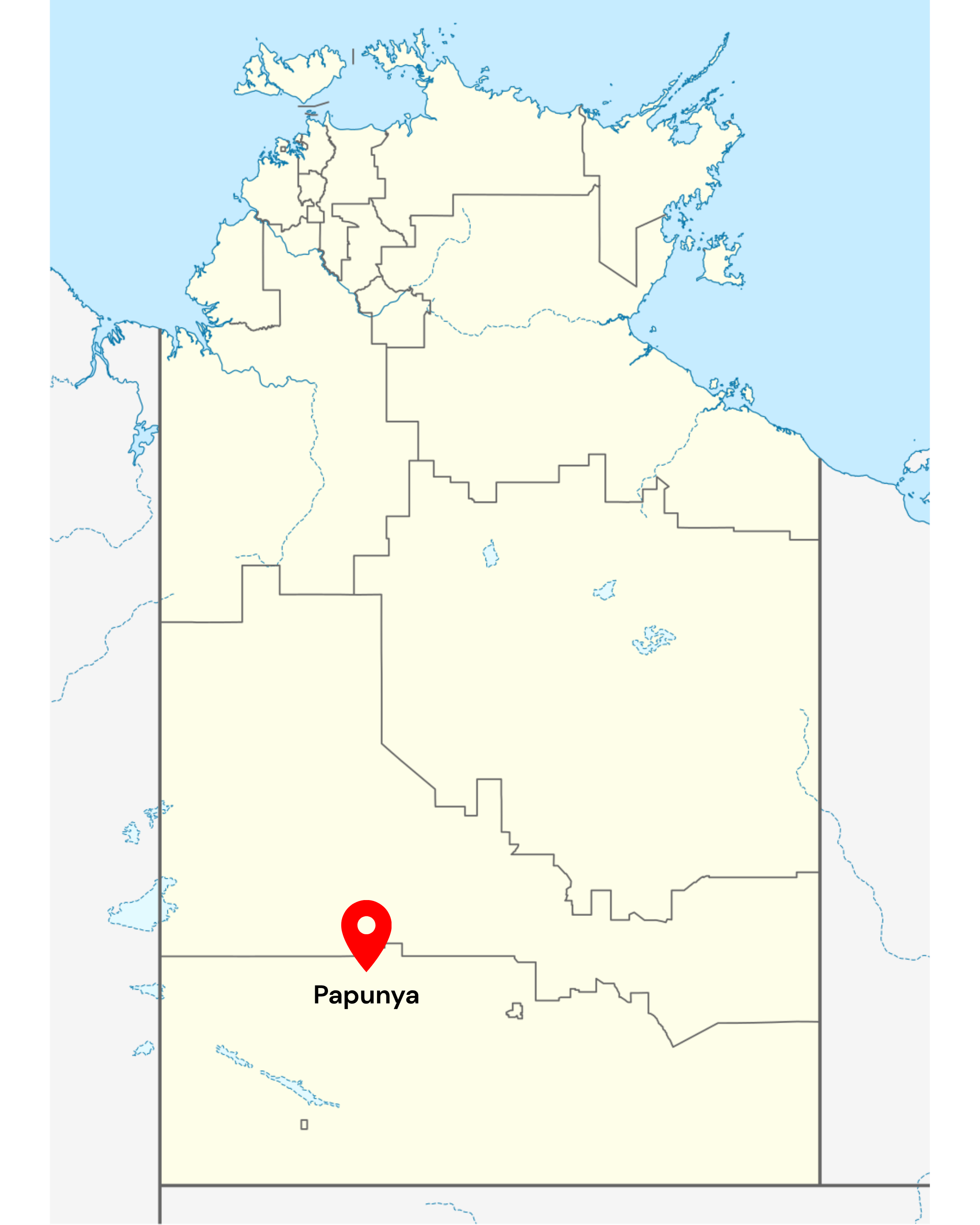
Despite this increasing need for safe, cool houses, Papunya homes are among the least energy efficient in the country. Most houses in Papunya lack basic requirements for a sweltering region like Central Australia, including insulation, shade and air conditioning.
Families report paying up to $1,000 on power bills in the summer months to keep their homes cool enough to live. If residents aren’t able to pay their bills, power to their homes is automatically shut off. Fans and refrigerators immediately stop working, leaving families stranded in extreme desert heat.
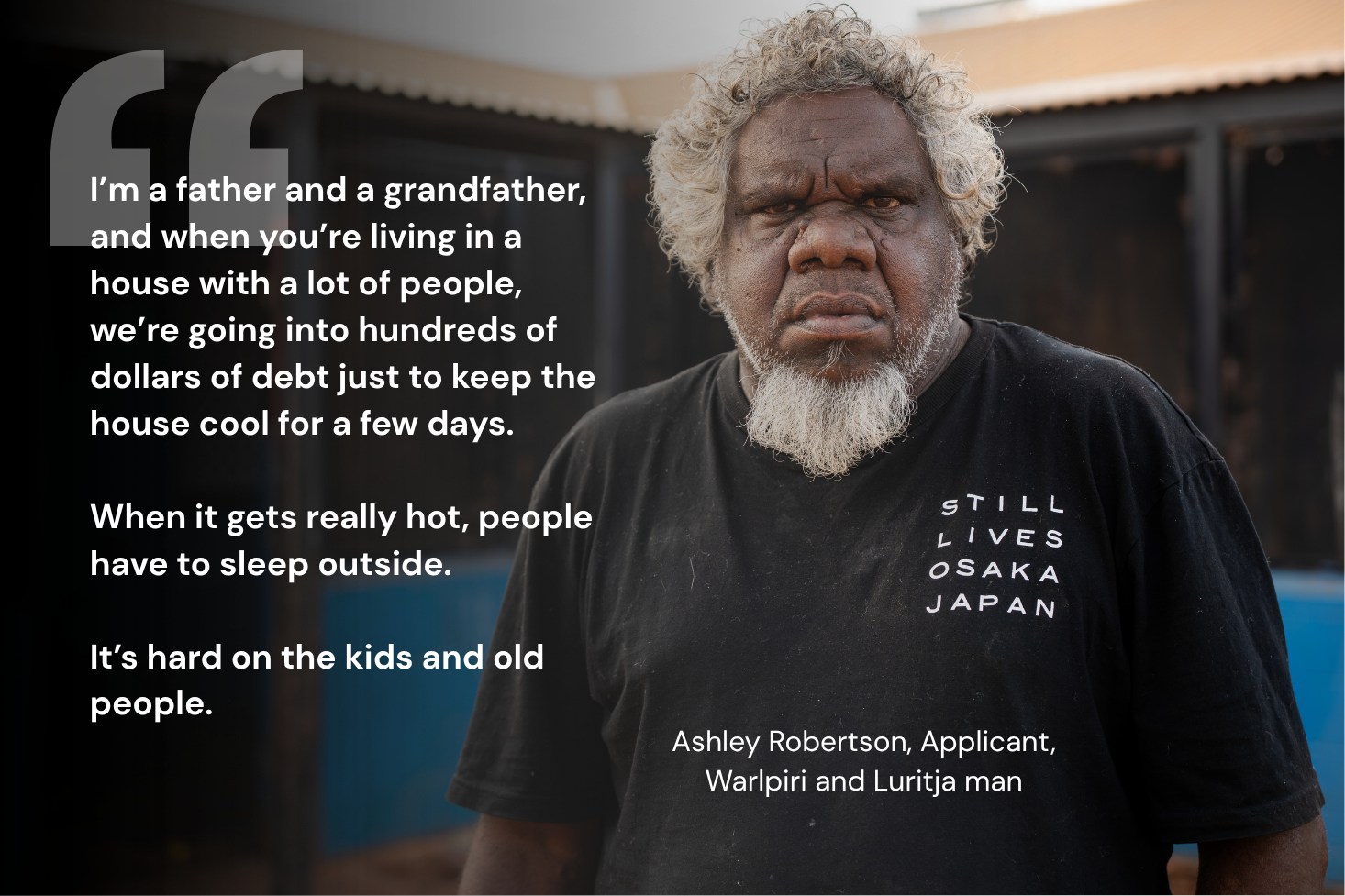
Photo by Tash Khan, Human Rights Law Centre
If the Papunya community wins in the Federal Court, the case would compel the NT Government to raise their housing standards and ensure houses in remote Aboriginal communities like Papunya are safe in the face of extreme temperatures. The case might also lay the groundwork for similar cases in other states and territories to help ensure public housing around the country is safe to live in the climate crisis.
The plaintiffs are represented by their legal team at the Human Rights Law Centre.